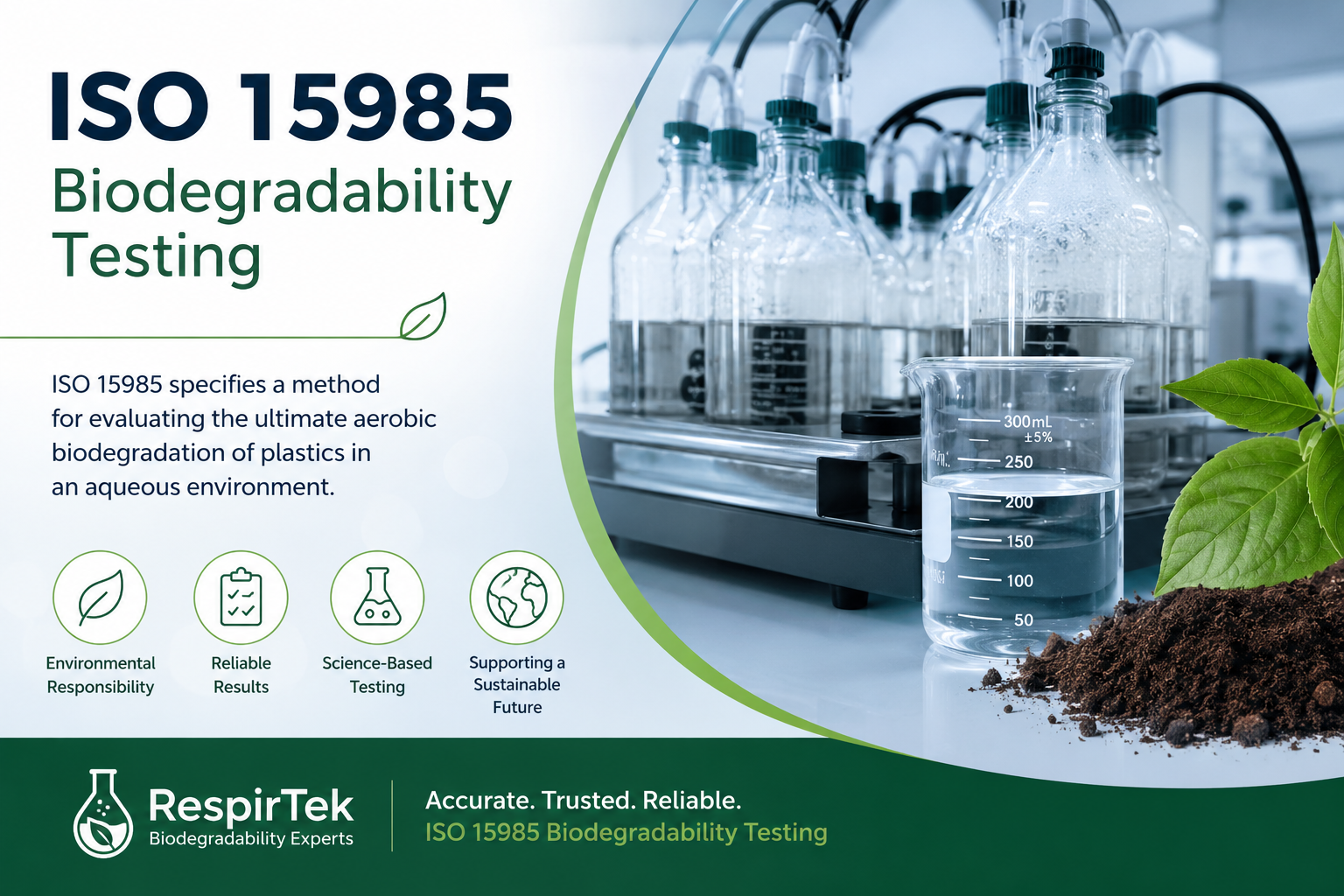
What Is ISO 15985 Biodegradability Testing?
ISO 15985 biodegradability testing is an internationally recognized laboratory method used to evaluate the anaerobic biodegradability of plastic materials under high-solids anaerobic digestion conditions. The standard is commonly applied to biodegradable plastics, bio-based materials, packaging products, and other organic materials intended for environments where oxygen is limited.
As sustainability regulations and environmental claims continue to evolve, manufacturers increasingly rely on ISO 15985 biodegradability testing to determine whether a material can biologically break down in anaerobic digestion systems while generating measurable biogas production.
The test provides valuable insight into how a product behaves in environments such as:
- Industrial anaerobic digesters
- High-solids municipal waste systems
- Organic waste processing environments
- Controlled anaerobic treatment facilities
Because anaerobic digestion plays an increasingly important role in global waste management and renewable energy production, ISO 15985 biodegradability testing has become an important tool for product developers, regulatory professionals, and sustainability teams.
How ISO 15985 Biodegradability Testing Works
ISO 15985 biodegradability testing measures the extent of anaerobic biodegradation by monitoring the production of biogas, primarily methane and carbon dioxide, generated by microorganisms during the degradation process.
In the study, the test material is exposed to anaerobic inoculum under controlled laboratory conditions. The inoculum typically originates from active anaerobic digesters or sludge systems capable of supporting microbial degradation.
During the test:
- The test material is introduced into sealed anaerobic reactors.
- Microorganisms metabolize biodegradable organic carbon.
- Biogas production is monitored over time.
- Results are compared to positive controls and blank systems.
- Final biodegradation percentages are calculated based on theoretical gas production.
The methodology helps determine whether a material demonstrates meaningful anaerobic biodegradation under controlled digestion conditions.
Why Choose an ISO/IEC 17025: 2017 Accredited ISO 15985 Biodegradability Testing Lab?
Selecting the right ISO 15985 biodegradability testing lab ensures your materials undergo rigorous testing in compliance with international standards. A certified and experienced lab provides:
- Accurate and Reliable Results – Laboratories accredited under ISO/IEC 17025:2017 maintain strict quality control measures to ensure precision.
- Regulatory Compliance – ISO/IEC 17025:2017 accredited laboratories are recognized as technically competent and trustworthy, which is crucial when dealing with regulatory bodies.
- Versatile Testing Solutions – ISO/IEC 17025:2017 accredited biodegradability laboratories have the technical expertise to perform testing on a variety of material types.
- Comprehensive Reporting – Detailed biodegradation reports help companies make informed decisions about product biodegradability.
Selecting an experienced biodegradability testing lab is an important part of generating reliable environmental testing data. Anaerobic biodegradation studies require controlled conditions, technical expertise, and accurate monitoring systems to ensure dependable results.
Because biodegradability testing standards are highly technical, working with an experienced and ISO/IEC 17025:2017 biodegradability testing lab can help organizations avoid unnecessary delays while ensuring scientifically defensible data.
ISO 15985 Biodegradability Testing Applications
The ISO 15985 method is equivalent to the ASTM D5511 method, with both having the same overall purpose and very similar testing approaches. Both test methods are often used to support sustainability programs for materials intended for anaerobic digestion environments, and with careful consideration, other anaerobic environments such as landfills. Both methods provide valuable anaerobic biodegradation data that can support environmental assessments and product development initiatives. The main reason to choose one method over the other is usually based on geographic preference.
ISO 15985 biodegradability testing is often selected for international product evaluations, while ASTM D5511 biodegradability testing is often selected for North American markets.
Why Anaerobic Biodegradability Testing Matters
Anaerobic biodegradability testing has become increasingly important as industries focus on reducing environmental impact and improving waste management strategies.
Many products ultimately enter environments where oxygen availability is limited. Traditional aerobic biodegradation tests may not fully represent these conditions. ISO 15985 biodegradability testing helps bridge this gap by evaluating microbial degradation under anaerobic conditions.
Benefits of anaerobic biodegradability testing include:
- Evaluating environmental persistence
- Supporting sustainable product development
- Generating data for environmental claims
- Assisting with regulatory compliance
- Supporting certification programs
- Understanding methane generation potential
- Assessing biodegradation in waste treatment systems
Manufacturers in industries such as packaging, consumer goods, chemicals, agriculture, and plastics frequently utilize these standards when developing environmentally responsible materials.
Applications of ISO 15985 and ASTM D5511 Testing
ISO 15985 and ASTM D5511 biodegradability testing are commonly used for:
- Biodegradable plastics
- Flexible films
- Packaging products
- Bio-based polymers
- Agricultural materials
- Consumer products
- Specialty additives and formulations
Choosing the Right Biodegradability Testing Standard
Selecting the appropriate biodegradability standard depends on several technical and commercial factors.
Organizations should consider:
- Intended product application
- Disposal environment
- Regulatory objectives
- Geographic market requirements
- Certification program requirements
- Desired environmental claims
In many cases, laboratories and technical consultants can help determine whether ISO 15985 biodegradability testing, ASTM D5511 biodegradability testing, or additional biodegradation studies are most appropriate for a specific product.
Because environmental testing standards continue to evolve, selecting the correct methodology early in product development can help streamline compliance efforts and reduce future testing delays.
Conclusion
ISO 15985 biodegradability testing is an important tool for evaluating anaerobic biodegradation under high-solids digestion conditions. This method helps organizations understand how materials behave in oxygen-limited environments while supporting sustainability initiatives, regulatory programs, and environmental product claims.
As industries continue to prioritize environmentally responsible materials and waste management strategies, anaerobic biodegradability testing will remain a critical component of sustainable product development and environmental compliance.
If your company aims to conduct biodegradability testing, collaborating with an ISO/IEC 17025:2017-accredited, experienced laboratory can streamline the process, reduce uncertainty, and provide expert guidance at every stage. At RespirTek, we specialize in biodegradability testing, helping businesses confidently meet their biodegradability testing goals while ensuring compliance with industry regulations. Our team provides comprehensive data progression updates throughout the entire testing process, keeping you informed every step of the way. Contact us today to take the next step toward obtaining biodegradability certification and making a meaningful impact on environmental sustainability.