Introduction
As sustainability regulations tighten globally, biodegradability certification has become a critical requirement for manufacturers of chemicals, detergents, packaging materials, and consumer goods. Brands are no longer simply claiming environmental friendliness; they are expected to provide scientifically validated proof that their products break down safely in natural environments.
At the center of this verification process is standardized laboratory testing, including OECD 301B biodegradability testing, one of the most widely recognized methods used to evaluate whether a substance is readily or ultimately biodegradable.
This blog explains what biodegradability certification is, how it works, and why OECD 301B can play such an important role in supporting credible environmental claims.
What Is Biodegradability Certification?
Biodegradability certification is an independent third-party verification that a product or material meets specific standards, indicating that it can be completely broken down by microorganisms into natural substances such as carbon dioxide, water, and biomass under defined conditions.
Unlike marketing claims such as “eco-friendly” or “green,” biodegradability certification communicates a specific environmental benefit based on standardized laboratory evidence and adherence to internationally recognized test protocols and certification testing schemes.
Common certification frameworks include:
- OECD test guidelines
- ISO environmental standards
- ASTM test protocols
These frameworks ensure results are reproducible, comparable, and scientifically defensible.
Why Biodegradability Certification Matters
The demand for biodegradability certification is increasing due to regulatory, environmental, and consumer-driven factors.
- Regulatory Compliance
Governments and regulatory bodies increasingly require biodegradation data for:
- Chemical registrations
- Detergent and surfactant approvals
- Packaging compliance
- Environmental risk assessments
- Anti-greenwashing initiatives
- Market Access
Retailers and global brands often require certified biodegradation data before approving suppliers. Without certification, products may be excluded from key supply chains.
- Environmental Responsibility
Certified biodegradability ensures that substances do not persist in relevant environments, reducing long-term ecological impact.
- Consumer Trust
Modern consumers expect proof, not promises. Certification provides transparent validation of biodegradability claims.
Understanding OECD 301B Biodegradability Testing
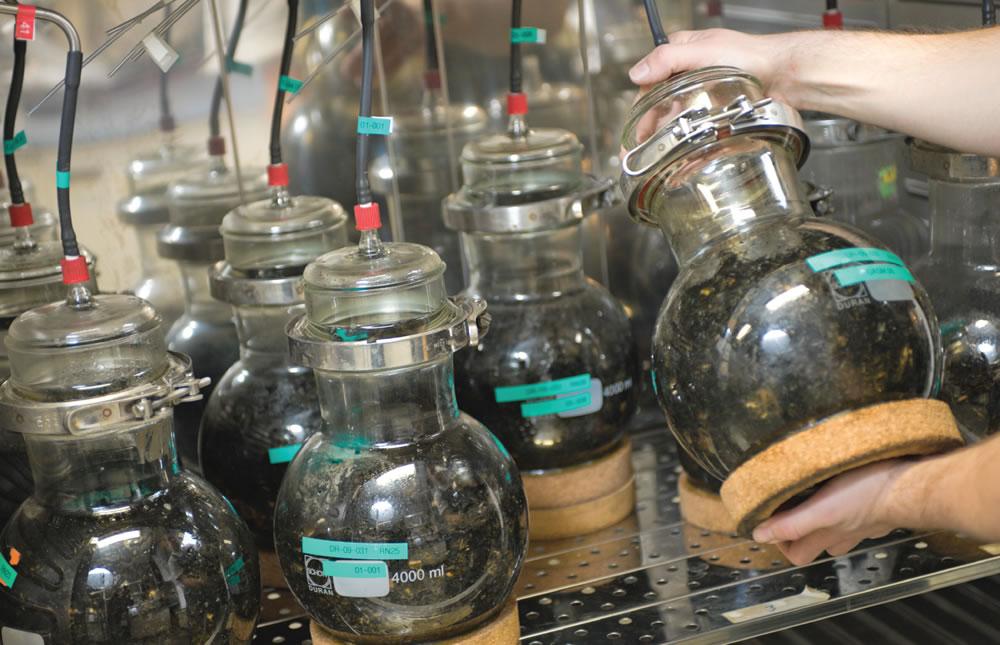
A key method supporting many biodegradability certifications is OECD 301B biodegradability testing, also known as the CO₂ evolution test.
This test is part of the OECD 301 series, which evaluates whether a substance is readily or ultimately biodegradable under aerobic aquatic conditions.
How OECD 301B Works
In this method:
- A test substance is placed in an aqueous mineral medium
- Microorganisms (inoculum) are added
- The system is incubated under controlled aerobic conditions
- CO₂ production is measured over 28 days or longer if needed
The amount of carbon dioxide produced is compared to the theoretical maximum (ThCO₂) of the substance.
Pass Criteria
A substance is generally considered “readily biodegradable” if:
- It achieves ≥60% biodegradation within a 10-day window during the 28-day test period once 10% biodegradation has been achieved
- A classification of “readily biodegradable” is indicative of rapid and ultimate biodegradation in most environments.
A substance is considered “ultimately biodegradable” if:
- It achieves ≥60% biodegradation during the 28-day test period or longer if needed
- A classification of “ultimately biodegradable” indicates that the test material or product has the potential for ultimate biodegradation under favorable conditions.
These thresholds are widely used in regulatory frameworks worldwide.
Why OECD 301B Is So Widely Accepted
OECD 301B biodegradability testing is one of the most trusted methods because:
- Global Regulatory Recognition
It is accepted by:
- REACH (EU chemical regulation)
- EPA-related frameworks
- Many ecolabel certification programs
- International sustainability standards
- High Scientific Rigor
The method measures actual carbon transformation into CO₂, making it a direct indicator of mineralization rather than partial breakdown.
- Comparability Across Products
Because the method is standardized, results can be compared across different chemicals, formulations, and industries.
- Wide Range of Applicability
To determine biodegradability, OECD 301B measures CO2 evolution, which is a nonspecific measure of biodegradability. This allows for the method to apply to a wide range of materials in areas where environmental persistence is a major concern, such as cleaning products, surfactants, and industrial formulations.
The Link Between Certification and Testing
Biodegradability certification is fundamentally dependent on validated testing methods such as OECD 301B. Without standardized, reproducible testing protocols, certification bodies cannot independently verify biodegradability claims.
In practice, the certification process generally follows this workflow:
- Product formulation review
Assessment of the product’s composition to determine applicable testing and certification requirements, including evaluation of individual component testing requirements based on the specific certification scheme. - Selection of test methods
Identification of appropriate OECD, ISO, or ASTM methods - Laboratory testing
Execution of standardized tests (e.g., OECD 301B) in a controlled
ISO/IEC 17025:2017 laboratory environment. - Data interpretation
Evaluation of results against the criteria defined by the certification program. - Decision and feedback loop
Certification is granted if criteria are met, or reformulation and additional testing are required if requirements are not satisfied.
This structured process helps ensure consistency, transparency, and scientific integrity across global sustainability certification programs. As a result, it is essential to partner with experienced laboratories accredited to ISO/IEC 17025:2017, with the specific method listed on their scope of accreditation, that have a strong understanding of both biodegradability testing such as OECD 301B and the broader requirements of certification frameworks.
Conclusion
As environmental expectations continue to rise, biodegradability certification has become a key requirement for product credibility and regulatory acceptance. At the heart of this process are standardized methods, such as OECD 301B biodegradability testing, which provide scientifically validated methods for assessing whether substances truly break down in the environment.
For manufacturers, investing in proper testing is no longer optional; it is essential for market access, compliance, and sustainability leadership.
If your company is interested in biodegradability certification, partnering with an experienced ISO/IEC 17025:2017 accredited laboratory can streamline the testing process, reduce uncertainty, and provide expert guidance at every stage.
At RespirTek, we specialize in biodegradability certification testing, supporting manufacturers and formulators as they work to meet regulatory requirements and sustainability goals. Our laboratory provides comprehensive support across the full testing lifecycle, including method selection, study initiation, execution, and detailed data interpretation.
We also provide regular testing progress updates, with data progression throughout the study, ensuring full transparency and clear communication from start to finish.
Contact us today to take the next step toward achieving biodegradability certification and advancing your environmental sustainability objectives with confidence.