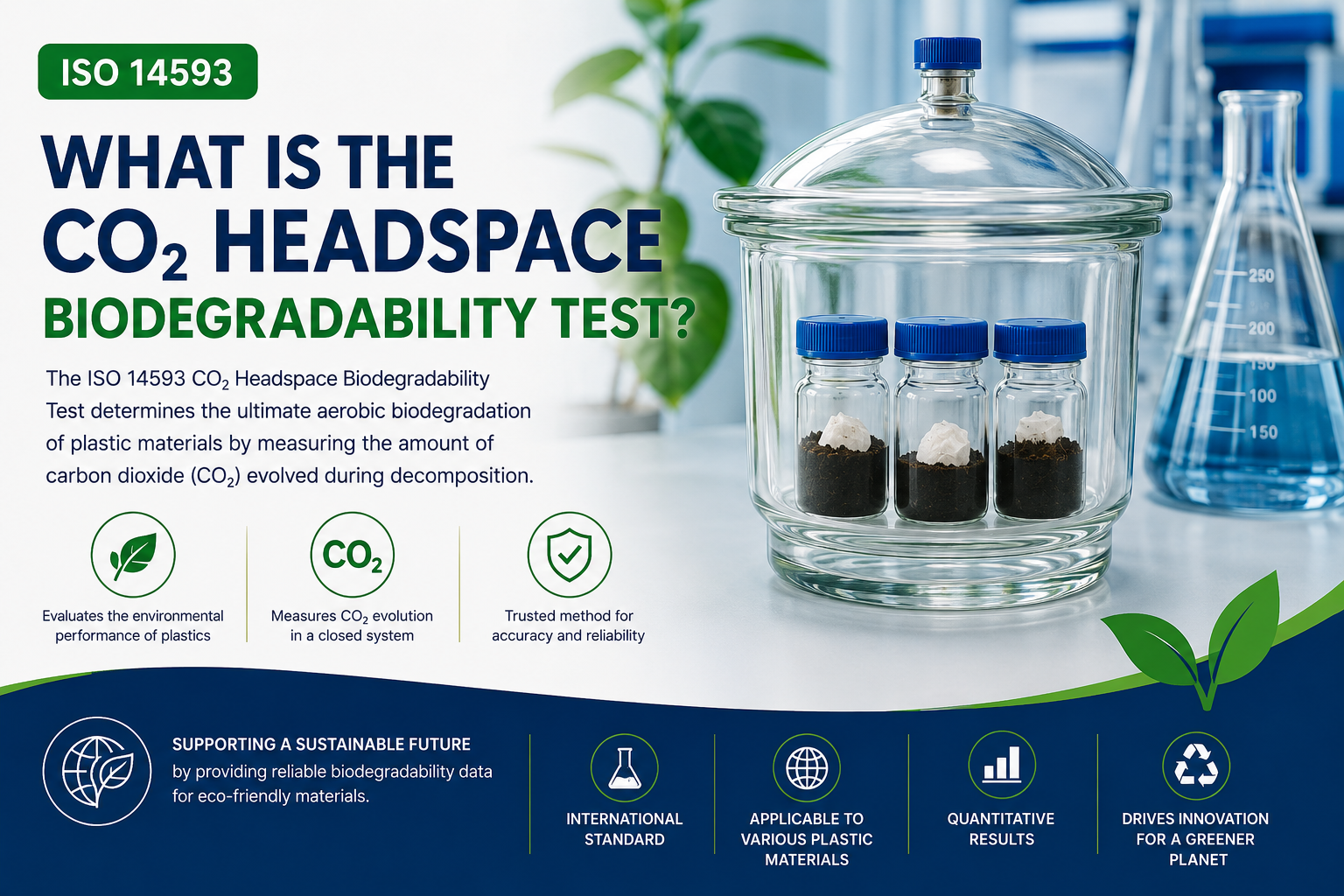
ISO 14593 is an international test method used to evaluate the aerobic biodegradability of organic substances in an aqueous environment. Commonly known as the CO₂ headspace test, the method measures inorganic carbon produced as microorganisms break down a test substance.
ISO 14593 can provide valuable data for evaluating biodegradation and, depending on the applicable testing framework and interpretation of the results, can be used in assessing both ready and ultimate biodegradability.
For companies developing biodegradable products or materials, understanding how ISO 14593 works can help determine whether it is an appropriate method for their testing objectives.
How Does ISO 14593 Measure Biodegradability?
In an ISO 14593 test, a test substance is introduced into a mineral medium containing microorganisms. The test vessels are sealed and incubated under aerobic conditions.
As microorganisms consume and break down the organic material, they produce carbon dioxide. The carbon dioxide is measured as inorganic carbon (IC) within the test vessels.
The amount of inorganic carbon produced is compared with the theoretical amount that could be generated from the organic carbon originally contained in the test substance. This comparison is used to calculate the percentage of biodegradation.
Unlike methods that simply measure the depletion of a substance, ISO 14593 evaluates the conversion of organic carbon into inorganic carbon as a result of microbial activity.
When Is ISO 14593 Used?
ISO 14593 can be used to evaluate appropriate organic substances that can be tested in an aqueous environment. The characteristics of the material should be considered before selecting the method.
Factors such as water solubility, volatility, and potential microbial inhibition can affect how a test should be conducted and whether ISO 14593 is appropriate. The standard specifically addresses water-soluble and poorly water-soluble substances, as well as volatile substances and substances that are not inhibitory to the test microorganisms at the selected concentration.
For this reason, companies should discuss their material and testing objectives with experienced biodegradability testing labs before beginning a study.
ISO 14593 Compared with Other Biodegradability Methods
ISO 14593 is one of several standardized methods available for evaluating biodegradation. Different methods use different measurements to assess microbial activity.
For example, some biodegradability methods measure dissolved organic carbon (DOC), while others evaluate oxygen consumption. The most appropriate method depends on the material, its physical and chemical characteristics, and the purpose of the testing.
Selecting the correct method before testing begins can help ensure that the resulting data addresses the intended testing objective.
Why Use Experienced Biodegradability Testing Labs?
Biodegradability testing requires controlled test conditions, appropriate controls, accurate analytical measurements, and careful interpretation of the resulting data.
Experienced biodegradability testing labs can help evaluate the characteristics of a material and determine whether ISO 14593 or another biodegradability method is appropriate.
Laboratory expertise can be particularly important when testing materials with limited water solubility, volatility, or properties that could affect microbial activity.
Companies may also choose an ISO/IEC 17025:2017-accredited laboratory to provide additional assurance that testing is performed within a recognized quality system and according to established laboratory procedures.
Understanding ISO 14593 Results
An ISO 14593 result represents the percentage of the test substance’s organic carbon that has been converted to inorganic carbon under the defined laboratory conditions.
The result provides useful information about the biodegradation of the material during the study, but it should always be considered in relation to the test conditions, controls, and applicable criteria.
Understanding the testing standard and how its results are interpreted is essential when using biodegradability data for product development, certification, regulatory considerations, or environmental claims.
Choosing the Right Biodegradability Testing Lab
Selecting an experienced biodegradability testing lab is important for obtaining reliable and defensible results.
When evaluating a laboratory, consider its ISO/IEC 17025:2017 accreditation and verify that the applicable testing standard is included in its scope of accreditation. Also consider the laboratory’s experience with biodegradability testing, technical expertise, and ability to help determine the appropriate testing method for your material.
Clear communication and regular testing updates can also help ensure that you understand the progress of your study and the resulting data.
Conclusion
ISO 14593 provides a standardized approach for evaluating aerobic biodegradation by measuring inorganic carbon generated through microbial activity. Commonly referred to as the CO₂ headspace test, it can provide valuable information about the biodegradation of organic substances under controlled laboratory conditions.
For companies evaluating biodegradable materials, working with qualified biodegradability testing labs can help ensure that the appropriate test method is selected and that the resulting data are reliable and meaningful.
If your company is considering ISO 14593 testing, RespirTek can help determine whether this method is appropriate for your material and testing objectives. Our team specializes in biodegradability testing and provides technical support and data progression updates throughout the entire testing process.
Learn more about RespirTek’s biodegradability testing services or contact our team to discuss your testing requirements.