As sustainability expectations continue to rise, companies are under increasing pressure to substantiate environmental claims with credible, scientific data. One of the most widely recognized methods for assessing biodegradability is OECD 301F, a standard test used to determine whether a substance is readily or ultimately biodegradable under aerobic conditions.
Working with a qualified biodegradability testing lab is essential to ensure accurate, regulatory-accepted results that can support environmental claims and product positioning.
What is OECD 301F?
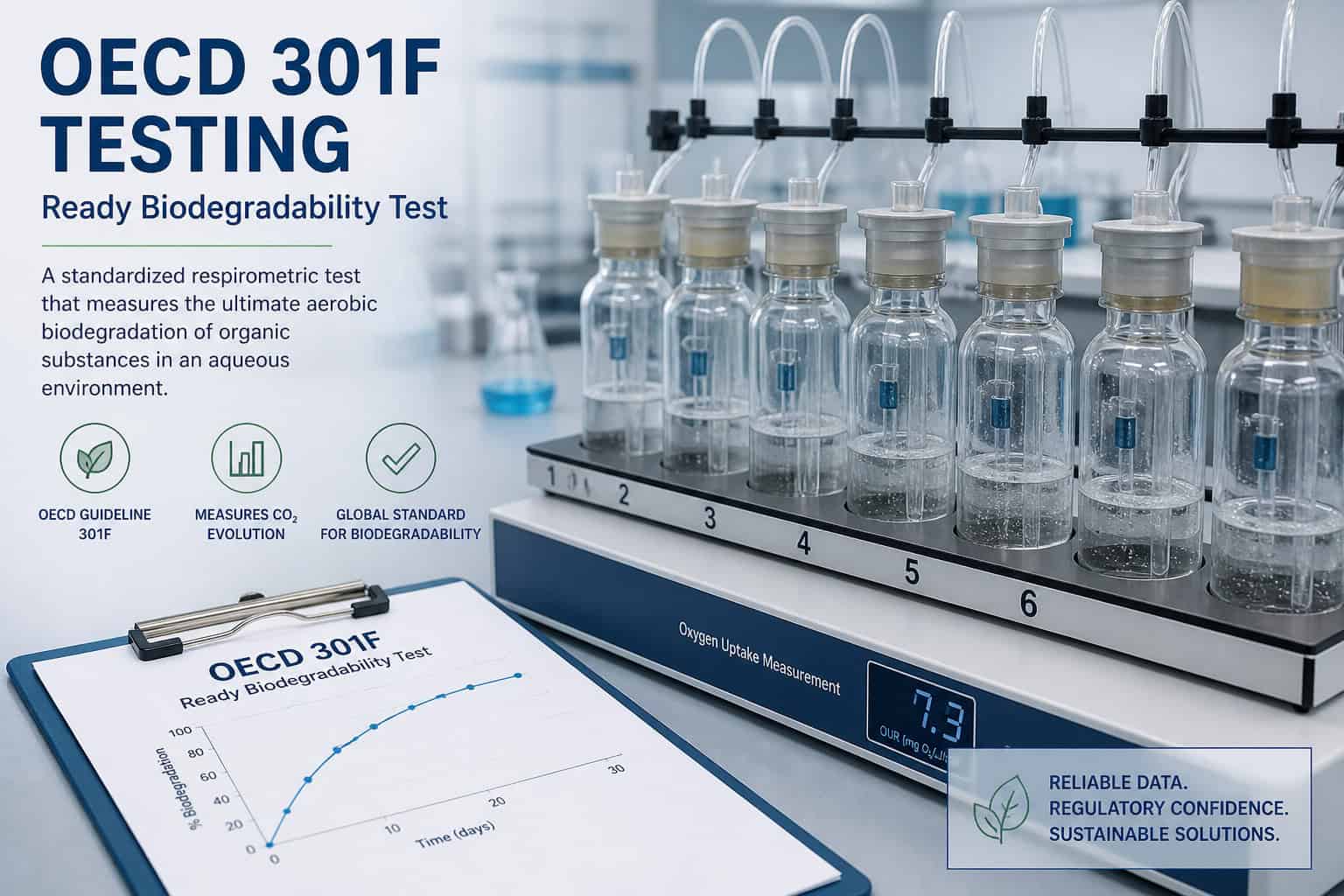
OECD 301F is a standardized biodegradability test that measures oxygen consumption to determine whether a substance is readily or ultimately biodegradable under aerobic conditions. It is widely used to support environmental claims and regulatory requirements.
Also known as the Manometric Respirometry Test, OECD 301F evaluates microbial activity by measuring oxygen uptake as microorganisms break down a test substance.
In this test:
- A substance is introduced to a microbial inoculum from a wastewater treatment plant
- Oxygen consumption is continuously measured
- Biodegradation is calculated based on theoretical oxygen demand (ThOD) or consumption
OECD 301F Pass Criteria
To be classified as readily biodegradable, a substance must meet the following criteria:
- ≥60% biodegradation
- Within a 28-day test period
- Must meet the 10-day window criterion
To be classified as ultimately biodegradable, a substance must meet the following criteria:
- ≥60% biodegradation during the test period, with the option to extend beyond the initial 28 days if needed
These thresholds are widely accepted across regulatory frameworks and ecolabel programs.
Why OECD 301F Matters
OECD 301F plays a critical role in:
- Regulatory compliance
- Environmental risk assessments
- Sustainability and marketing claims
As scrutiny around environmental claims increases, companies must rely on standardized testing from an ISO/IEC 17025:2017 accredited laboratory to ensure credibility and defensibility.
Without validated data from a trusted biodegradability testing lab, claims such as “biodegradable” may be challenged or rejected by regulators or customers.
Applications of OECD 301F Testing
OECD 301F is widely used for products that enter aqueous environments, including:
- Household and cleaning products (detergents, surfactants)
- Personal care and cosmetic products (shampoos, body washes)
- Industrial and specialty chemicals
- Biodegradable materials and formulations
These products often end up in wastewater systems, making this test highly relevant for real-world environmental performance.
Advantages of OECD 301F
- Versatility
Suitable for a wide range of substances, including those with low solubility.
- Continuous Monitoring
Provides real-time insight into microbial activity through oxygen consumption.
- Regulatory Acceptance
Recognized globally for environmental and regulatory submissions.
- Environmental Relevance
Commonly used to assess the potential for biodegradation in wastewater treatment systems and other aerobic environments.
Choosing the Right Biodegradability Testing Lab
Selecting the right biodegradability testing lab is critical to ensuring high-quality, defensible results. When choosing a lab, consider the following factors:
- ISO/IEC 17025:2017 Accreditation – Ensure the lab has ISO/IEC 17025:2017certification and that this testing protocol is listed on their scope of accreditation. This ensures standardized procedures and data integrity.
- Technical Expertise – A specialized lab can guide test selection, study design, and result interpretation
- Consultative Approach – The best labs provide insight into how results align with regulatory and marketing goals, not just raw data.
- Customer Support & Data Transparency – Look for a lab that prioritizes clear communication and provides real-time data progression updates. Receiving interim results throughout the testing process ensures timely insights, allowing your company the ability to make informed decisions.
Supporting Environmental Claims with Certification
As demand for verified sustainability claims grows, testing alone may not be enough. Many companies are now pursuing biodegradability certification programs that validate claims through structured evaluation and allow the use of a recognizable certification mark.
This approach provides:
- Third-party credibility, ensuring independent verification that strengthens the trustworthiness of your environmental claims
- Clear communication of environmental performance to customers, regulators, and stakeholders, helping demonstrate responsible product development
- Increased trust with customers and regulators, reinforcing your brand’s commitment to sustainability and differentiating your products in a competitive, environmentally conscious market
Conclusion
OECD 301F is an important method for evaluating ready and ultimate biodegradability, particularly for products entering aquatic environments. Its flexibility, regulatory acceptance, and real-world relevance make it a preferred choice across industries.
By partnering with an experienced biodegradability testing lab, companies can generate reliable data, support environmental claims, and strengthen their sustainability positioning.
As regulatory and consumer expectations continue to evolve, investing in high-quality biodegradability testing and certification will play an increasingly important role in product development, marketing credibility, and long-term environmental stewardship.
If your company aims to achieve OECD 301F certification, collaborating with an ISO/IEC 17025:2017 accredited and experienced laboratory can streamline the process, reduce uncertainty, and provide expert guidance at every stage. At RespirTek, we specialize in biodegradability testing, helping businesses confidently meet their sustainability goals while ensuring compliance with industry regulations. Our team provides comprehensive data progression updates throughout the entire testing process, keeping you informed every step of the way. Contact us today to take the next step toward obtaining biodegradability certification, improving your product’s environmental profile, and making a meaningful impact on global environmental sustainability.