As sustainable packaging and environmentally friendly materials grow in demand, verifying the biodegradability of these products becomes essential. Two widely accepted and scientifically rigorous methods to evaluate biodegradability in compost and soil environmental compartments are ASTM D5338 and ASTM D5988 biodegradability testing. The ASTM D5338 test plays a key role in verifying whether your product is compostable and helps companies meet international compostability standards. The ASTM D5988 test will evaluate biodegradability in natural, aerobic soil conditions.
What is ASTM D5338 Biodegradability Testing?
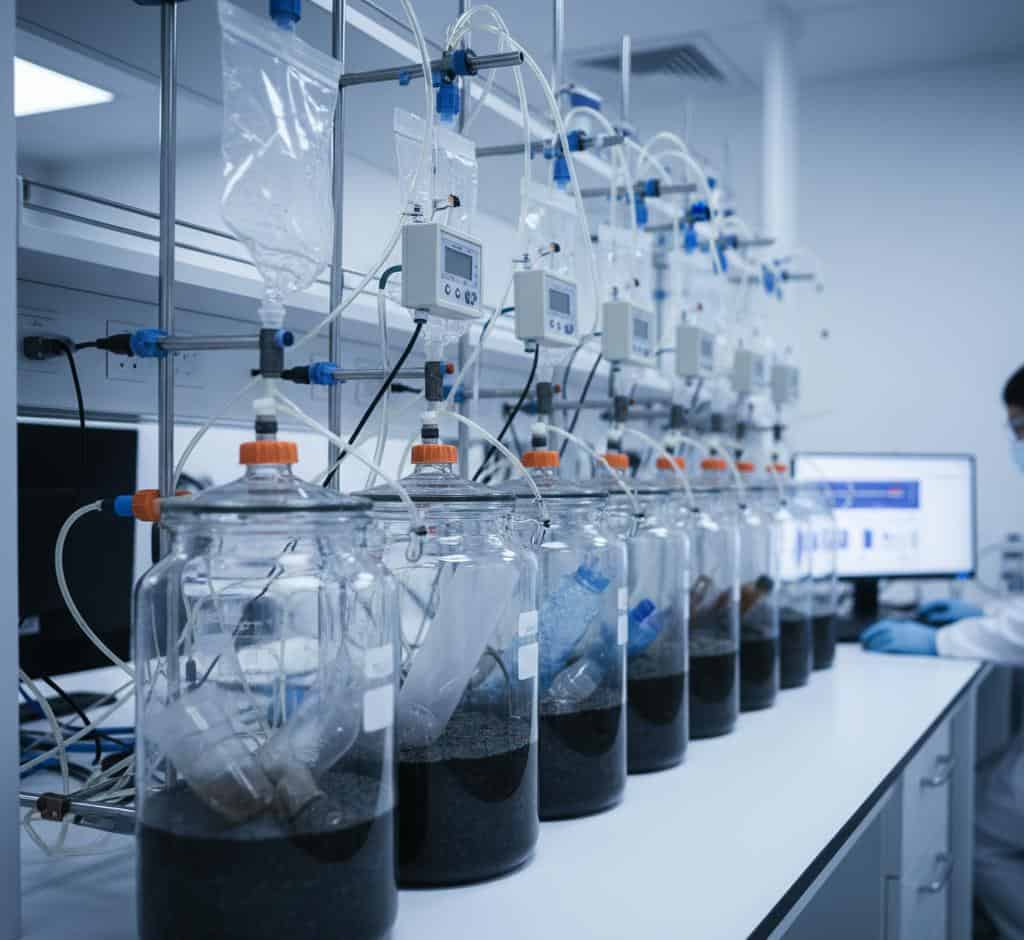
ASTM D5338 is a standardized test method that measures the aerobic biodegradation of materials under controlled industrial composting conditions. Specifically designed to mimic the thermophilic (high temperature) phase of industrial composting, the test evaluates how well a material breaks down biologically into carbon dioxide (CO₂), water, and biomass.
During the test, materials are placed in a composting environment at approximately 58°C, with regulated moisture, oxygen, and microbial activity. The percentage of CO₂ evolved indicates the level of biodegradation.
What is ASTM D5988 Biodegradability Testing?
ASTM D5988 is a standardized test method developed by ASTM International to assess the aerobic biodegradation of materials in soil. Specifically, it measures the extent to which a material can be broken down by microorganisms in a controlled soil environment, using carbon dioxide (CO₂) evolution as the primary indicator of biodegradation.
This method is commonly used to evaluate materials such as bioplastics, agricultural films, and other polymeric substances that may enter soil ecosystems. It provides critical data for determining a product’s environmental impact, especially in applications where materials are likely to be discarded or degrade in terrestrial environments.
Why Choose ASTM D5338 for Biodegradability Testing?
Using ASTM D5338 biodegradability testing offers several benefits:
- Certification Readiness: Many third-party certifications require ASTM D5338 as part of their evaluation process.
- Scientific Validation: Provides quantifiable data on a material’s biodegradability under industrial composting conditions.
- Regulatory Compliance: Helps companies meet some of the requirements of standards such as ASTM D6400.
- R&D Insights: Assists organizations in material selection and formulation for eco-friendly product development.
If your product is intended for disposal in industrial composting facilities, ASTM D5338 is the right test to help validate its environmental performance.
ASTM D5338 vs ASTM D5988 Biodegradability Testing
While ASTM D5338 tests for compostability, ASTM D5988 biodegradability testing evaluates materials under aerobic soil conditions. Here is how they compare:
Key Differences Between ASTM D5338 and ASTM D5988
| Feature | ASTM D5338 | ASTM D5988 |
| Environment | Industrial composting | Natural, aerobic soil |
| Temperature | 58°C (thermophilic) | 20°C (ambient) |
| Use Case | Compostable packaging, utensils, and films | Agricultural mulch, soil additives |
| Test Duration | Minimum of 45 days | Typically, 180 days |
If your product is designed to degrade in soil, such as agricultural films or erosion control products, ASTM D5988 biodegradability testing provides a more relevant evaluation. However, many companies use both methods to cover different disposal scenarios and strengthen sustainability claims.
When to Use ASTM D5338 Biodegradability Testing
You should consider ASTM D5338 testing if:
- Your product will be processed in an industrial composting facility.
- You want to verify biodegradation under controlled, high-temperature aerobic conditions.
- You’re aligning with standards like ASTM D6400.
When to Use ASTM D5988 Biodegradability Testing
You should consider ASTM D5988 testing if:
- Your product will be disposed of in a natural soil environment.
- You want to verify biodegradation under aerobic, ambient conditions.
Partnering with the Right Biodegradability Testing Laboratory
Accurate biodegradability testing requires strict control of test conditions, proper sample preparation, and precise CO₂ monitoring. Working with an ISO/IEC 17025:2017 accredited and experienced biodegradability testing lab ensures:
- Full compliance with biodegradability testing standards such as ASTM D5338 and ASTM D5988
- Reliable data for certification and marketing claims
- Fast turnaround and expert consultation on test results
At RespirTek, we specialize in biodegradability testing and can help you determine which method—ASTM D5338, ASTM D5988, or both—is right for your product.
Conclusion
In today’s environmentally conscious market, validating a product’s biodegradability performance is no longer optional; it is expected. ASTM D5338 biodegradability testing is a standard for proving that your materials biodegrade effectively in industrial composting environments, while ASTM D5988 biodegradability testing will assess biodegradability in natural, aerobic soil conditions.
Partnering with a trusted ASTM D5338 and ASTM D5988 testing laboratory ensures compliance with industry standards and regulatory requirements, ultimately boosting credibility and market acceptance. A well-documented testing process not only helps companies navigate legal obligations but also enhances their brand reputation among eco-conscious consumers, retailers, and businesses looking for verified sustainable products.
If your company needs ASTM D5338 or ASTM D5988 biodegradability testing, collaborating with an ISO/IEC 17025:2017 accredited and experienced laboratory can streamline the process, reduce uncertainty, and provide expert guidance at every stage. At RespirTek, we specialize in biodegradability and compostability testing, helping businesses confidently meet their sustainability goals while ensuring compliance with industry regulations. Our team provides comprehensive data progression updates throughout the entire testing process, keeping you informed every step of the way. Contact us today to take the next step toward making a meaningful impact on environmental sustainability.