Biodegradability testing is increasingly important today. As companies strive to demonstrate their environmental responsibility, understanding, and implementing ISO 17556 biodegradability testing is essential for organizations developing plastics, composites, coatings, or other polymer-based products. This international standard provides a rigorous method for measuring the ultimate aerobic biodegradability of materials in soil, making it a vital tool in the field of biodegradability testing.
At RespirTek, Inc., we routinely help organizations navigate this complex terrain, and in this blog entry, we will walk you through what ISO 17556 covers, why it matters, and how it fits into the broader biodegradability testing landscape.
What ISO 17556 Covers
ISO 17556:2019 was developed by the International Organization for Standardization (ISO) and its Technical Committee ISO/TC 61/SC 14, which addresses plastics and environmental aspects. The key features of ISO 17556 include:
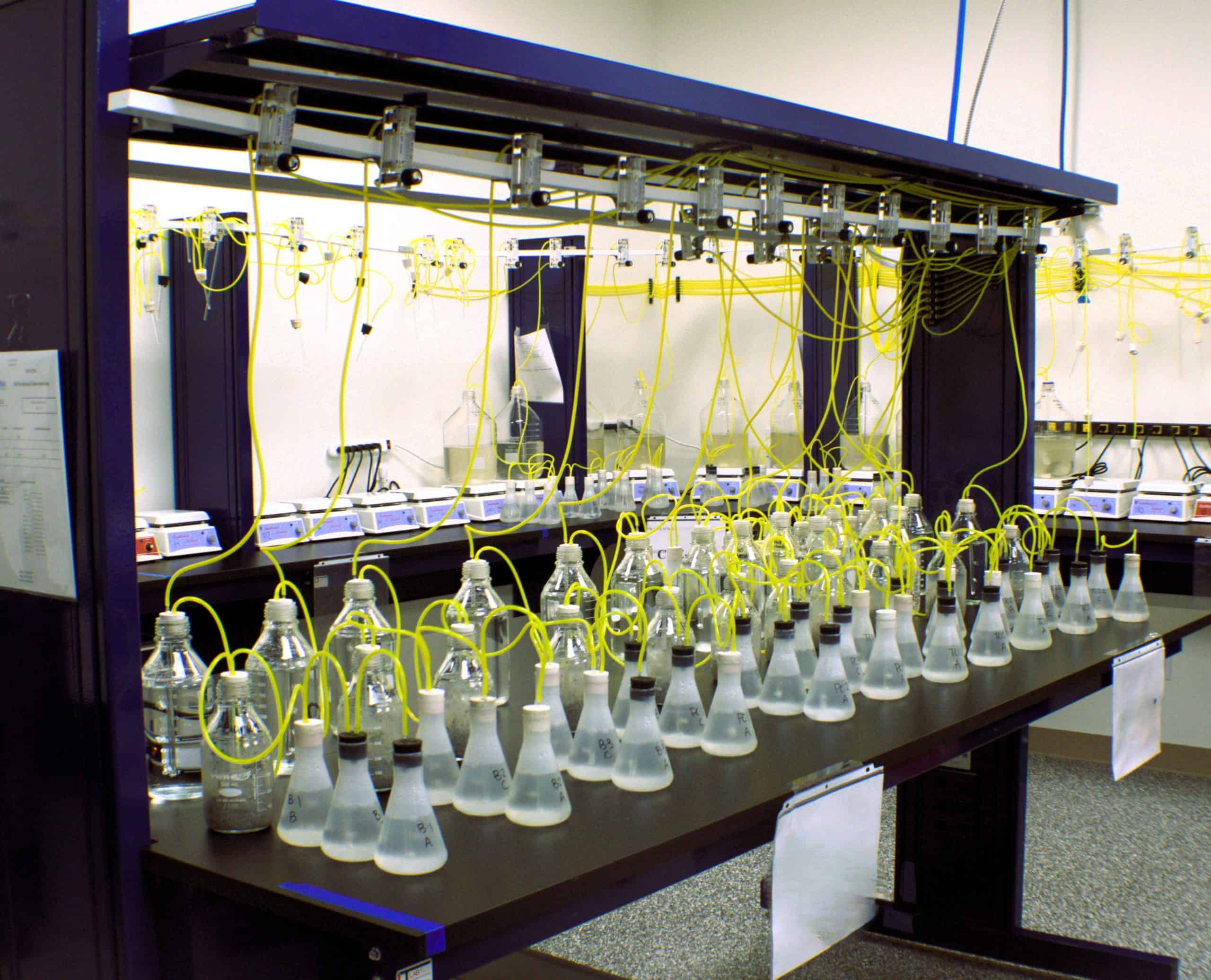
- Scope & purpose: It specifies a method for determining the ultimate aerobic biodegradability of materials in soil by either measuring the oxygen demand in a closed respirometer or by measuring the amount of carbon dioxide evolved.
- Materials covered: Natural and/or synthetic polymers, copolymers or mixtures thereof; plastic materials containing additives such as plasticizers or colorants; water-soluble polymers; other organic materials.
- Test environment: The material is mixed with soil – at RespirTek, we use a standardized soil mixture to ensure the viability of the inoculum and to increase consistency across replicate reactors. The humidity of the soil is controlled to yield an optimum rate of biodegradation, and the resulting oxygen consumption or CO₂ evolution is measured.
- Timeframe: A normal test period is six months, but it may be shortened or extended until a plateau in biodegradation is achieved; the total test period must not exceed two years.
- Key performance metric: Biodegradation is expressed as a percentage comparing the actual oxygen/CO₂ result versus the theoretical oxygen demand (ThOD) or theoretical CO₂ (ThCO₂) for the material.
Why ISO 17556 Matters for Biodegradability Testing
- Realistic End‑of‐life Context
Where many biodegradability tests simulate composting or aquatic environments, ISO 17556 biodegradability testing focuses on soil, a disposal environment that is increasingly relevant for films, mulches, agriplastics, horticultural materials, and other end-of-life scenarios.
- Independent Assessment of “Ultimate” Biodegradation
Because the test measures ultimate mineralization (conversion of carbon in the material into CO₂ or consumption of oxygen), it provides a more complete picture of what happens to the material in the environment rather than just conducting disintegration testing. Disintegration testing on its own will only determine whether the material will physically break down into smaller pieces. Disintegration without biodegradation still results in environmental contamination (e.g. microplastics).
- Credible Basis for Claims
For companies wishing to make credible statements about biodegradability in soil, ISO 17556 provides a widely recognized method. Using standardized methods strengthens regulatory compliance, stakeholder trust, and market acceptance.
- How the Test Works: Key Steps in Practice
Here is a simplified overview of how ISO 17556 is typically executed:
- Sample preparation: The test material is characterized (organic carbon content, chemical formula if needed) and ideally processed into powder form (max 250 µm for comparability) unless film/fragment form is necessary.
- Soil preparation: Natural soil is collected from the top layer, sieved (preferably <2 mm), inert materials removed, and pre-conditioning may be applied. Alternatively, a defined standard soil may be used.
- Mixture and incubation: Test material is mixed with soil; the mixture is incubated at a controlled temperature (20-28°C) in the dark or diffused light, in an enclosure free from toxic vapors.
- Measurement of biodegradation: Either the oxygen demand is measured, or the CO₂ evolved is measured by passing CO₂-free air and analyzing the gas. From that, the percentage biodegradation relative to the theoretical is calculated.
- Duration to plateau: The test continues until the degree of biodegradation plateaus (i.e., no further significant increases in the data) or until six months have passed (though it may extend up to two years).
- Interpretation and reporting: Results provide the % biodegradation, the duration of the lag‑phase, and the duration of the biodegradation phase.
Choosing Biodegradable Products
When selecting eco-friendly or sustainable products, it is important to look beyond marketing terms and identify those that have undergone biodegradability testing through recognized standards such as ISO 17556. Doing so ensures that the products you choose truly break down in natural environments and minimize long-term impact.
Here are a few tips to help you make informed choices:
- Check Product Labels: Look for verified claims or certifications indicating that the material has passed biodegradability testing. Phrases like “tested according to ISO 17556” or “biodegradable in soil” signal credible testing practices.
- Research the Brand: Many responsible organizations share details about their sustainability programs and biodegradability testing methods on their websites. Reviewing this information can reveal how committed a company is to environmental performance.
- Ask About Testing Results: Do not hesitate to contact companies directly for information about their biodegradability testing reports, laboratory partners, and material safety data. Reputable brands are usually transparent about their testing processes and results.
By choosing products verified through scientifically recognized biodegradability testing, you contribute to a cleaner environment and encourage more companies to adopt rigorous sustainability standards.
How RespirTek Can Help
In summary, ISO 17556 biodegradability testing serves as a vital benchmark for assessing how microbes in soil environments see materials as a food source or not.. This method not only helps organizations quantify a product’s environmental impact but also empowers consumers and industries to make decisions that support a more sustainable planet.
For organizations seeking dependable and accurate biodegradability assessments, partnering with an ISO/IEC 17025:2017 accredited laboratory is essential. At RespirTek, Inc., we specialize in biodegradability testing under a wide range of international standards, including ISO 17556. Our experienced team provides expert guidance, detailed data progression updates, and data transparency throughout every phase of testing.
Whether you are developing new sustainable materials, validating product claims, or pursuing certification, RespirTek can help you navigate the technical and regulatory landscape with confidence. Contact us today to learn how ISO 17556 testing can support your biodegradability goals and strengthen your environmental credentials.