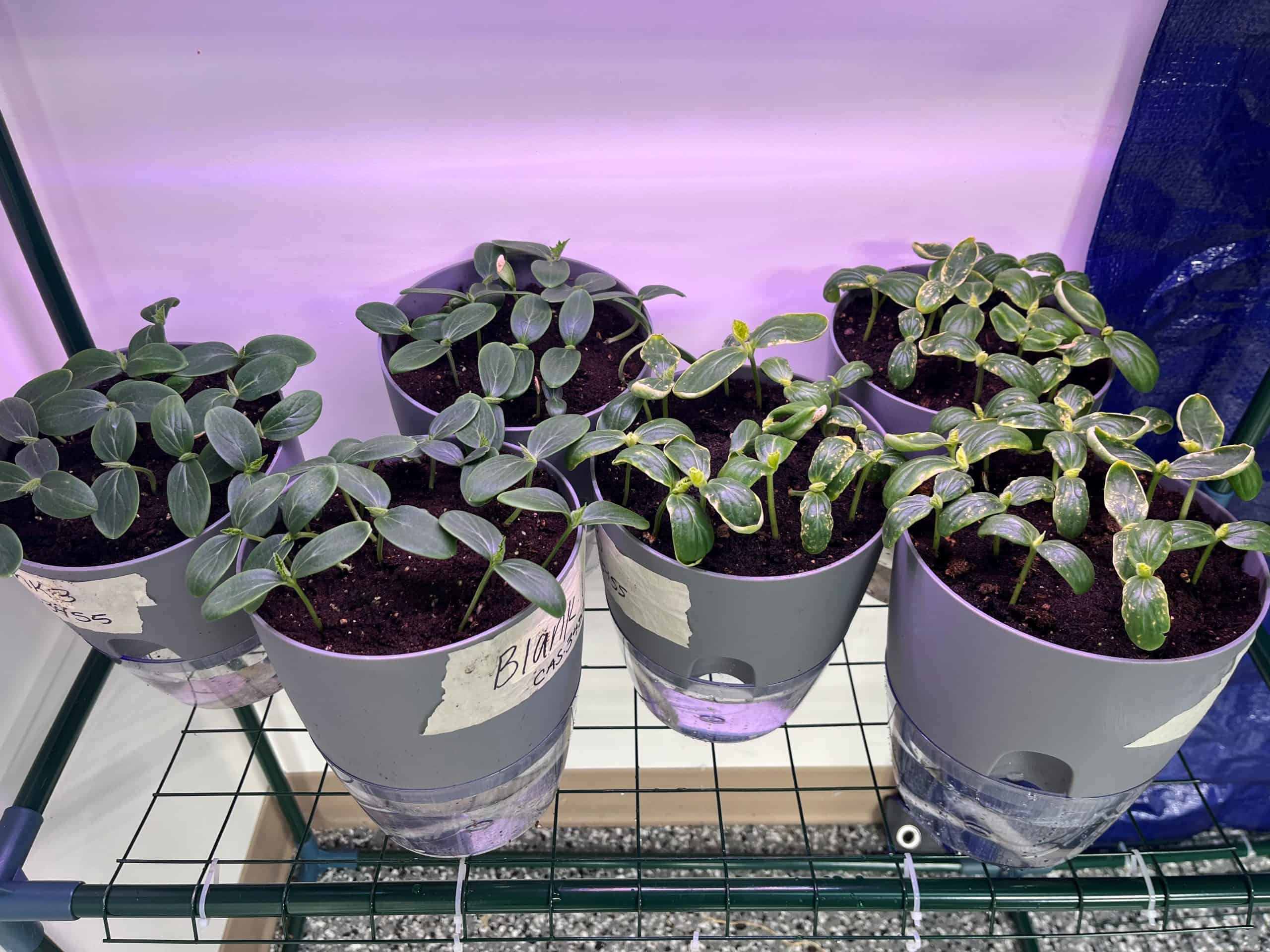
As companies innovate with biodegradable materials, chemicals, and biobased technologies, the need to demonstrate environmental safety has never been stronger. At RespirTek, we support manufacturers, researchers, and product developers by providing accredited ecotoxicity testing services, ensuring that new materials are safe for the environment and meet regulatory and certification requirements.
One of the most important standards we perform in this space is OECD 208, a globally recognized guideline used to evaluate the effects of substances on terrestrial plants. Whether you are advancing a new material, pursuing eco-label certification, or completing a regulatory environmental assessment, OECD 208 plays a vital role in verifying that your product does not inhibit plant growth or harm soil ecosystems.
What Is OECD 208?
OECD 208: Terrestrial Plant Test – Seedling Emergence and Seedling Growth Test is an internationally accepted method for determining how a chemical or material affects early plant development. This stage of growth is highly sensitive to environmental stressors, making it ideal for detecting ecological risk.
The test is widely required for:
- Chemical registrations and regulatory submissions
- Biodegradability and compostability certifications
- Soil safety evaluations
- Environmental compliance for new product introductions
For clients developing environmentally responsible products, OECD 208 provides data that is essential for meeting global expectations for safe, sustainable design.
Why Organizations Rely on OECD 208
Plant health is foundational to terrestrial ecosystems, and even low concentrations of certain substances can influence seed germination, survival, and growth. For companies introducing materials that may enter soil, either intentionally or through end-of-life breakdown, OECD 208 is a critical component of an environmental safety profile.
At RespirTek, we routinely perform OECD 208 testing for clients in:
- Bioplastics and packaging
- Consumer products
- Agricultural and soil amendment technologies
- Specialty chemicals
- Compostable and biodegradable materials
The results allow our clients to demonstrate compliance, reduce environmental liability, and support certification applications with defensible, accredited data.
What OECD 208 Measures
When conducting OECD 208 in our ISO/IEC 17025: 2017 accredited laboratory, RespirTek evaluates key plant development indicators, including:
- Seedling emergence rate
- Survival
- Shoot height and early vegetative growth
- Wet and Dry biomass accumulation
- Visible injury or phytotoxicity symptoms
Species Selection and Test Design
OECD 208 requires testing across several plant species to capture responses from both monocots and dicots. Commonly tested species may include:
- Monocots
- Barley: (Hordeum vulgare)
- Oat (Avena sativa)
- Onion (Allium cepa)
- Dicots
- Cucumber: (Cucumis sativus)
- Lettuce (Lactuca sativa)
- Tomato (Solanum lycopersicum)
Our controlled-environment growth chambers ensure consistent temperature, humidity, and photo period conditions to support reliable and reproducible results.
How OECD 208 Fits into Ecotoxicity Testing
As part of our broader ecotoxicity testing program, OECD 208 provides valuable insight into how a material performs within soil ecosystems. RespirTek and its extensive network of contracted laboratories offer a full suite of terrestrial and aquatic ecotoxicity testing, including OECD 201, 202, 203, 207, 216/217, 222, and others, to help clients build complete environmental safety profiles.
Integrating OECD 208 with related methods allows companies to:
- Validate Environmental Claims
- Meet international regulatory requirements
- Support biodegradable, compostable, and biobased product marketing
- Identify potential ecological risks early in development
For clients pursuing certification or regulatory acceptance, this comprehensive dataset is critical.
Why Choose RespirTek for OECD 208 Testing?
RespirTek is one of the only laboratories in the United States specializing exclusively in biodegradability and ecotoxicity testing under ISO/IEC 17025:2017 accreditation. With over 35 standards, including OECD, ASTM, ISO, EN, and equivalent methods, our laboratory delivers high-quality data trusted by industry leaders and certification bodies.
When you choose RespirTek for OECD 208 testing, you benefit from:
- Accredited testing methods and strict quality controls
- State-of-the-art plant growth chambers and controlled environments
- Expert technical guidance throughout testing
- Regulatory-ready reports used in global submissions
- A dedicated team experienced in biodegradability and ecotoxicity science
We support clients from early R&D through certification and final product launch, helping ensure that materials entering the market behave safely and responsibly in the environment.
How OECD 208 Supports Sustainable Innovation
For environmentally focused companies, OECD 208 is more than a regulatory requirement; it is a tool for validating sustainability claims and differentiating your product in a competitive market. Demonstrating that your material does not harm plant life strengthens customer trust, supports brand integrity, and helps reduce environmental impact across the product lifecycle.
If you are seeking to showcase your product’s environmental safety, RespirTek’s team is here to help you navigate OECD 208 and all related ecotoxicity testing requirements. Collaborating with an ISO/IEC 17025:2017 accredited and experienced laboratory can streamline the process, reduce uncertainty, and provide expert guidance at every stage. Our team provides comprehensive data progression updates throughout the entire testing process, keeping you informed every step of the way. Contact us today to take the next step toward conducting OECD 208 testing and making a meaningful impact on environmental sustainability.