As claims related to compostability and sustainability continue to increase, it is critical that those claims are supported by scientifically robust and internationally recognized test methods. One of the most widely used standards for evaluating the biodegradation of plastics under aerobic composting conditions is ISO 14855.
ISO 14855 provides quantitative data on the ultimate biodegradation of plastic materials, making it a cornerstone method for compostability assessments, regulatory submissions, and certification programs worldwide.
What Is ISO 14855?
ISO 14855 is titled:
“Determination of the ultimate aerobic biodegradability of plastic materials under controlled composting conditions – Method by analysis of evolved carbon dioxide.”
This test method evaluates the extent to which a plastic material is biologically converted into carbon dioxide (CO₂) by microorganisms in an active composting environment. Because CO₂ evolution is directly linked to microbial metabolism, ISO 14855 measures true biodegradation, which is the utilization of the plastic material by microbes, converting the plastic into base components found in nature, rather than simple fragmentation or physical disintegration, which can lead to microplastic contamination.
For manufacturers and product developers, ISO 14855 provides defensible, quantitative evidence that a material undergoes biological mineralization under industrial composting conditions.
Why ISO 14855 Is Critical for the Biodegradation of Plastics
Many materials marketed as “biodegradable” may physically break down without being fully metabolized by microorganisms. ISO 14855 addresses this distinction by focusing on ultimate biodegradation, defined as the conversion of organic carbon into CO₂, water, mineral salts, and biomass.
Key advantages of ISO 14855 include:
- Measurement of biological activity, not just visual change
- Quantitative biodegradation results expressed as a percentage of theoretical maximum CO₂
- Broad acceptance by international regulators and certification bodies
- Alignment with compostability standards such as EN 13432 and ISO 17088
For companies seeking credible compostability claims, ISO 14855 is often a required core test.
How ISO 14855 Testing Is Performed
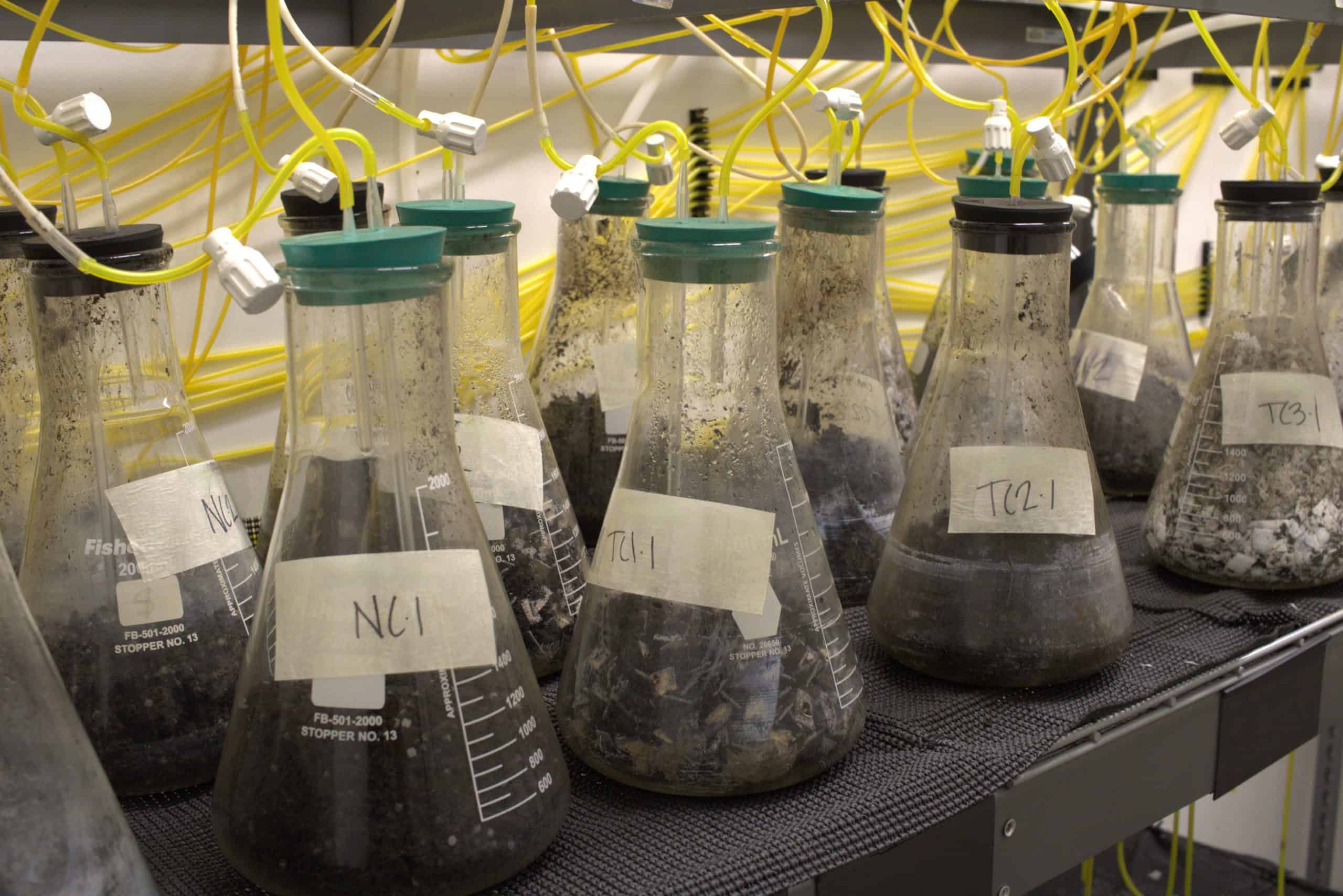
ISO 14855 testing is conducted under controlled aerobic composting conditions designed to simulate industrial composting systems.
Test Overview:
- Sample preparation: The test material is reduced in size and mixed with mature compost.
- Incubation conditions: The test is conducted at approximately 58°C, consistent with industrial composting temperatures.
- CO₂ monitoring: Carbon dioxide released during microbial degradation is continuously captured and measured.
- Reference material: A known biodegradable control material (typically microcrystalline cellulose) is tested in parallel to validate the test setup.
- Result calculation: Biodegradation is calculated by comparing measured CO₂ evolution to the theoretical maximum based on carbon content.
The test duration may extend up to 180 days, depending on the study objectives and applicable certification requirements.
Applications of ISO 14855
ISO 14855 is commonly used to evaluate:
- Compostable plastics and biopolymers
- Packaging films and molded plastic items
- Plastic resins and formulated materials
- Products assessed for compostability certification
It is important to note that ISO 14855 evaluates biodegradation only. Full compostability claims typically require additional testing, including disintegration, ecotoxicity, and sometimes chemical characterization.
ASTM D5338: The ASTM Equivalent to ISO 14855
For North American applications, ASTM D5338 is considered the functional equivalent test of ISO 14855.
ASTM D5338 is titled:
“Standard Test Method for Determining Aerobic Biodegradation of Plastic Materials Under Controlled Composting Conditions, Incorporating Thermophillic Temperatures.”
Key Similarities:
- Both standards measure ultimate aerobic biodegradation
- Both use controlled composting conditions at elevated temperatures
- Both quantify biodegradation based on CO₂ evolution
- Both rely on comparison to a biodegradable reference material, for example, microcrystalline cellulose, to validate the test setup
While there are procedural and reporting differences, the underlying scientific principles and outcomes are equivalent. As a result, many compostability certification programs accept either ISO 14855 or ASTM D5338, depending on regional or regulatory requirements.
Selecting the Appropriate Standard
Choosing between ISO 14855 and ASTM D5338 typically depends on:
- Target market and geographic region
- Certification or regulatory requirements
- Customer expectations
- Program alignment with international standards
For products intended for global markets, testing under one of these standards can often support multiple certification pathways.
Making Informed Choices About Biodegradable Products
For manufacturers, brands, and any organization evaluating biodegradable plastics, it is important to understand the benefits and limitations of materials supported by standardized biodegradability testing, such as ISO 14855. ISO 14855 testing can demonstrate that the tested material will undergo ultimate biodegradation when exposed to a controlled composting environment; however, other factors such as disintegration and ecotoxicity are equally important to consider when evaluating overall compostability. Also, materials that demonstrate ultimate biodegradation in an ISO 14855 test may not degrade in other, less aggressive environments, such as soil or seawater.
When reviewing products or raw materials:
- Verify documented testing: Look for references to recognized biodegradability test standards (e.g., ISO 14855 or ASTM D5338) in conjunction with other critical compostability tests or recognized biodegradability standards relevant to other environmental compartments.
- Review technical disclosures: Reputable manufacturers typically provide information on testing methods, applicable standards, and the scope of their biodegradability evaluations.
- Request supporting data when needed: Test summaries, laboratory reports, and explanations of test conditions can help clarify how biodegradation performance was assessed and whether results are applicable to the intended use environment.
Including this level of due diligence helps ensure that biodegradability claims are technically sound and supported by credible data.
Conclusion
ISO 14855 remains one of the most reliable and widely accepted methods for assessing the biodegradation of plastics under industrial composting conditions. By directly measuring microbial mineralization through CO₂ evolution, the standard provides high-quality data that supports credible environmental claims.
When paired with additional compostability testing, ISO 14855 helps ensure that biodegradable plastics meet both regulatory expectations and real-world performance requirements.
If you are interested in ISO 14855 testing, collaborating with an ISO/IEC 17025:2017 accredited and experienced laboratory can streamline the process, reduce uncertainty, and provide expert guidance at every stage. At RespirTek, we specialize in biodegradability and compostability testing, helping businesses confidently meet their sustainability goals while ensuring compliance with industry regulations. Our team provides comprehensive data progression updates throughout the entire testing process, keeping you informed every step of the way. Contact us today to take the next step toward obtaining compostability certification and making a meaningful impact on environmental sustainability.