In today’s environmentally driven regulatory landscape, accurately assessing the biodegradability of chemical substances is essential for ensuring environmental safety, meeting compliance requirements, and supporting sustainable product development. Among the suite of standardized biodegradation tests established by the Organization for Economic Co-operation and Development (OECD), OECD 302B biodegradability testing serves as a critical method for evaluating a substance’s potential to undergo microbial degradation under optimized conditions.
Unlike the “ready biodegradability” tests (such as OECD 301 series), which are designed to identify substances that degrade rapidly and completely in typical environmental settings, the OECD 302B test investigates a material’s inherent, ultimate biodegradability-its potential to completely degrade when microorganisms are provided with favorable conditions and sufficient adaptation time (if conducted). This approach provides a more complete understanding of the degradation behavior of compounds that may not pass ready tests but still possess meaningful biodegradation potential.
The test measures the reduction in dissolved organic carbon (DOC) or chemical oxygen demand (COD) over a defined period, offering quantitative insight into the extent and rate of biodegradation. Results from OECD 302B are widely recognized in environmental risk assessments, regulatory submissions (e.g., REACH, EPA, ISO 17025-accredited studies), and sustainability evaluations for product formulations.
In this article, we will examine the scientific principles behind the OECD 302B test, its methodological framework, and how its results can inform environmental fate modeling, product design, and compliance strategies for manufacturers aiming to demonstrate responsible stewardship of their materials.
What is OECD 302B Biodegradability Testing?
OECD 302B biodegradability testing is a standardized method developed by the Organization for Economic Co-operation and Development (OECD) for assessing the biodegradability of organic compounds in an aqueous environment. This test specifically measures the extent to which a substance can be broken down by microorganisms under favorable conditions.
Key Features of OECD 302B Testing:
- Focus on Inherent, Ultimate Biodegradability: The OECD 302B (Zahn-Wellens/EMPA) test is designed to evaluate a substance’s inherent, ultimate biodegradability—its potential to undergo microbial decomposition under optimal environmental conditions. Unlike ready biodegradability tests, it determines whether a compound can be significantly degraded when microorganisms are given sufficient exposure time and favorable conditions. This provides valuable insight into the intrinsic biodegradation potential of substances that may not fully degrade in shorter time periods.
- Controlled Laboratory Conditions
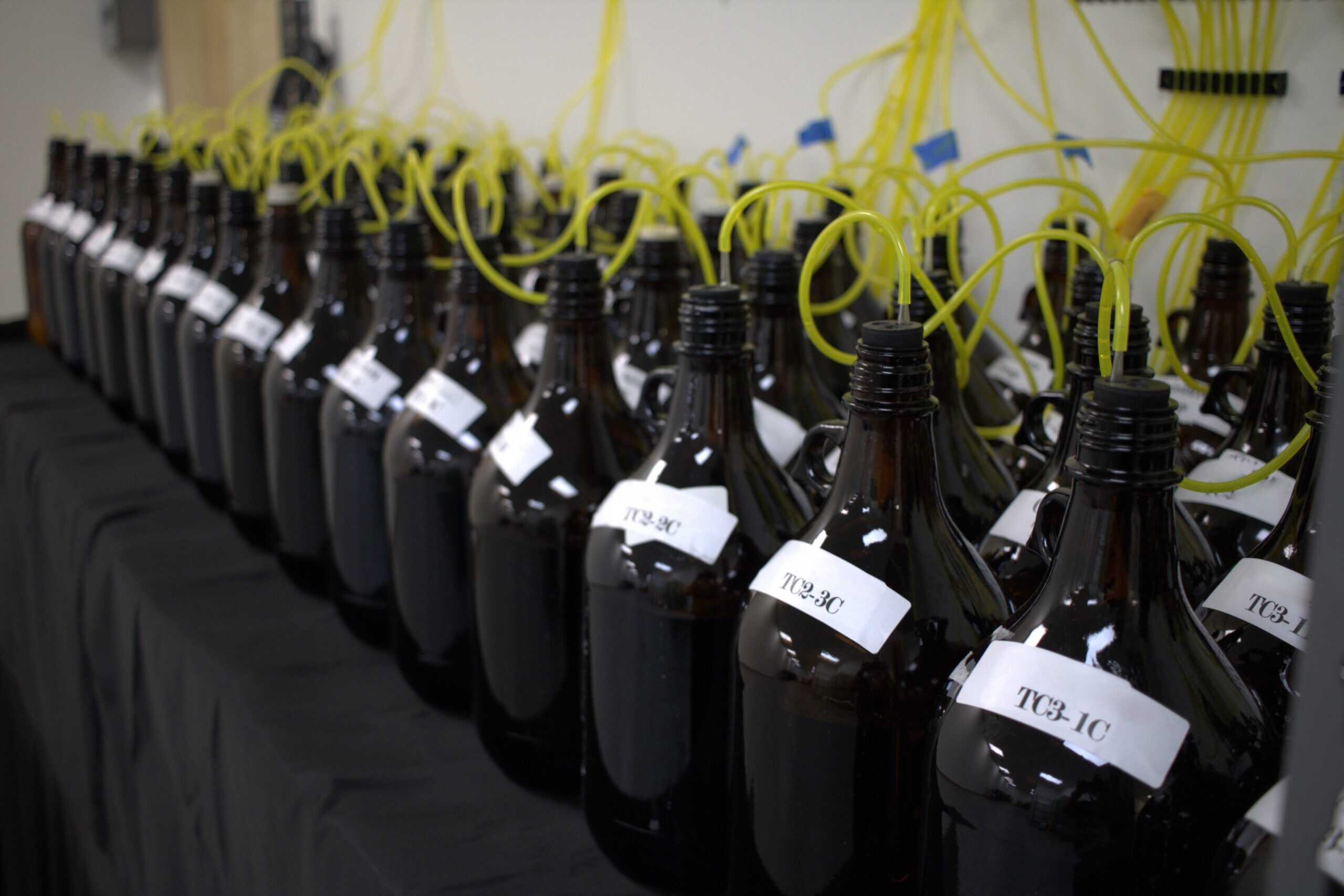
The test is performed under precisely controlled aquatic conditions to replicate aspects of the natural environment while allowing for high accuracy and reproducibility. Parameters such as temperature, aeration, pH, and nutrient composition are closely monitored to maintain an active microbial community capable of metabolizing the test substance. - Measurement of Dissolved Organic Carbon (DOC) or Chemical Oxygen Demand (COD)
Biodegradation is primarily quantified by monitoring the reduction in DOC or COD over time, providing a direct measurement of the organic carbon removed through microbial activity. Some variations may also track oxygen consumption or carbon dioxide evolution, offering complementary insights into the degradation pathway and extent of mineralization. - Allowance for Microbial Preadaptation
The OECD 302B protocol permits the use of an inoculum that has been pre-adapted to the test substance, enhancing the degradation potential of microorganisms. This feature makes the test particularly valuable for assessing complex or slowly degradable materials, as it helps identify inherent, ultimate biodegradability that might not be apparent in short-term screening assays. - Applicability to a Wide Range of Substances
OECD 302B can be applied to various soluble organic materials, including industrial chemicals, surfactants, polymers, and wastewater constituents. This method is especially useful in environmental fate studies, product formulation, and regulatory submissions where an understanding of long-term biodegradation behavior is required.
Why is OECD 302B Biodegradability Testing Important?
Understanding the results of OECD 302B biodegradability testing is essential for several reasons:
- Product Design: OECD 302B testing can help identify biodegradable ingredients and formulations.
- Environmental Protection: Products that are biodegradable help reduce pollution and minimize their impact on ecosystems, particularly aquatic environments.
- Consumer Awareness: Knowledge of a product’s biodegradability can inform consumers’ choices, allowing them to opt for environmentally friendly options.
- Regulatory Compliance: Many countries and regions require products to meet specific biodegradability standards, making OECD 302B testing crucial for legal compliance and market access.
Choosing Biodegradable Products
When shopping for environmentally friendly options, look for products that have undergone biodegradability testing. Here are some tips for identifying such products:
- Check Labels: Look for certifications or mentions of biodegradability testing on product labels.
- Research Brands: Many manufacturers provide information on their sustainability practices and testing standards on their websites.
- Inquire About Testing Results: Don’t hesitate to reach out to companies for details about their biodegradability tests, lab reports, and the safety of their products.
Conclusion
In summary, OECD 302B biodegradability testing is an essential tool for evaluating the environmental impact of products. By understanding the significance of this testing method, consumers and manufacturers can make informed decisions that contribute to a healthier planet.
Choosing products that have been rigorously tested for biodegradability helps protect our ecosystems and promotes sustainability. As we continue to prioritize environmental responsibility, knowing about biodegradability tests like OECD 302B will empower us to make better choices.
If your company aims to achieve biodegradability certification, collaborating with an ISO/IEC 17025:2017 accredited and experienced laboratory can streamline the process, reduce uncertainty, and provide expert guidance at every stage. At RespirTek, we specialize in biodegradability and compostability testing, helping businesses confidently meet their sustainability goals while ensuring compliance with industry regulations. Our team provides comprehensive data progression updates throughout the entire testing process, keeping you informed every step of the way. Contact us today to take the next step toward obtaining compostability certification and making a meaningful impact on environmental sustainability.