In today’s environmentally conscious world, industries are under increasing pressure to develop lubricants that are not only high-performing but also environmentally responsible. Biodegradability testing plays a critical role in verifying whether lubricants meet sustainability goals. Two of the most recognized testing methods in this field are ASTM D5864 biodegradability testing and OECD 301B biodegradability testing.
What is ASTM D5864 Biodegradability Testing?
ASTM D5864 biodegradability testing, titled “Standard Test Method for Determining Aerobic Aquatic Biodegradation of Lubricants or Their Components,” is specifically designed to test the biodegradability of fully formed lubricants or their components in an aerobic aquatic environment. This method is tailored to address the difficulties associated with testing water-insoluble complex mixtures such as lubricants, ensuring that these products break down when released into aquatic ecosystems.
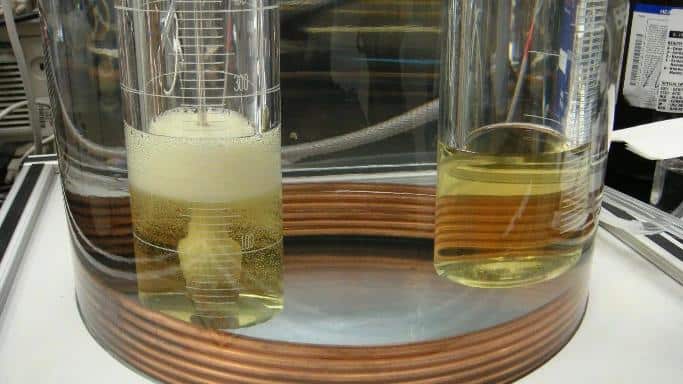
The method measures the degree of biodegradation by evaluating the amount of carbon dioxide (CO2) evolved during the breakdown of the test substance by microbial activity in the presence of oxygen. The test typically runs for 28-84 days and provides a quantitative measurement of the substance’s biodegradation as a percentage of theoretical CO2.
Lubricants and their components that achieve a high degree of biodegradation in an ASTM D5864 biodegradability test are often considered more environmentally friendly. This is particularly important for industries such as marine, forestry, agriculture, and construction, where lubricant leakage into the environment is a common concern.
What is OECD 301B Biodegradability Testing?
The OECD 301B biodegradability testing method, officially known as the “Ready Biodegradability: CO2 Evolution Test,” is one of the core methods established by the Organization for Economic Co-operation and Development (OECD) for evaluating the ready and ultimate biodegradability of organic compounds.
Like ASTM D5864, OECD 301B biodegradability testing measures the amount of carbon dioxide released as a result of microbial degradation. However, this method is broader in scope and is not limited to lubricants. It is used across various industries to assess the biodegradability of chemicals, surfactants, detergents, and other organic substances. When testing lubricants for biodegradability via OECD 301B testing, care should be taken during the test setup and execution to account for testing an insoluble complex mixture.
Additionally, the OECD 301B and ASTM D5864 tests share the same fundamental test design, with a few minor differences. ASTM D5864 requires testing in triplicate reactors, whereas OECD 301B uses duplicate reactors. ASTM D5864 also mandates a Heterotrophic Plate Count (HPC) analysis of the inoculum before test initiation. Furthermore, ASTM D5864 provides the option to pre-adapt the test material to the biomass before beginning the test.
Biodegradability Classification of Lubricants
Both ASTM D5864 biodegradability testing and OECD 301B biodegradability testing assess aerobic biodegradability using the same CO2 evolution test design, and both can be used to classify the biodegradability of lubricants according to ASTM and OECD definitions.
The ASTM methodology only defines biodegradability classifications for hydraulic lubricants in ASTM D6046, titled “Standard Classification of Hydraulic Fluids for Environmental Impact”. To classify hydraulic fluids under these guidelines, the fully formulated hydraulic fluid, which is commonly a complex mixture, is tested for biodegradability. Because of this, the ASTM classifications for biodegradable hydraulic fluids (Pw1-Pw4) qualify that small fractions of the original hydraulic fluid or other metabolites may persist in the environment, even for hydraulic fluids that otherwise extensively biodegrade.
Why Biodegradability Testing Matters
Biodegradability testing using standards like ASTM D5864 and OECD 301B is crucial for multiple reasons:
- Environmental Protection: These tests ensure that substances do not persist in the environment and break down into harmless components.
- Regulatory Compliance: Meeting these standards is often necessary to comply with environmental regulations in North America, Europe, and beyond.
- Market Differentiation: Products certified as biodegradable under recognized standards can be more appealing to environmentally conscious consumers and industries.
- Sustainability Goals: Companies looking to improve their sustainability metrics rely on biodegradability data to validate product performance claims.
Choosing the Right Test
The most common factors to consider when deciding between ASTM D5864 and OECD 301B biodegradability testing are any regulatory requirements. It is important to determine which standard is recognized by the regulatory agency in your target market. Companies pursuing certifications or entry into international markets often choose OECD 301B biodegradability testing, whereas ASTM D5864 biodegradability testing of lubricants is commonly referenced by US federal regulations.
Conclusion
Understanding the nuances of ASTM D5864 biodegradability testing and OECD 301B biodegradability testing is essential for manufacturers seeking to validate the environmental performance of their products.
By choosing the appropriate test method, companies can meet regulatory requirements, support sustainability claims, and protect the environment. For any business developing or marketing biodegradable products, incorporating biodegradability testing using ASTM D5864 or OECD 301B is a strategic and responsible decision.
If you are unsure which method is right for your product, consult with a certified biodegradability testing lab to guide you through the process and ensure accurate, reliable results. Collaborating with an ISO/IEC 17025:2017 accredited and experienced laboratory can streamline the process, reduce uncertainty, and provide expert guidance at every stage. At RespirTek, we specialize in biodegradability testing, helping businesses confidently meet their sustainability goals while ensuring compliance with industry regulations. Our team provides comprehensive data progression updates throughout the entire testing process, keeping you informed every step of the way. Contact us today to take the next step toward making a meaningful impact on environmental sustainability.